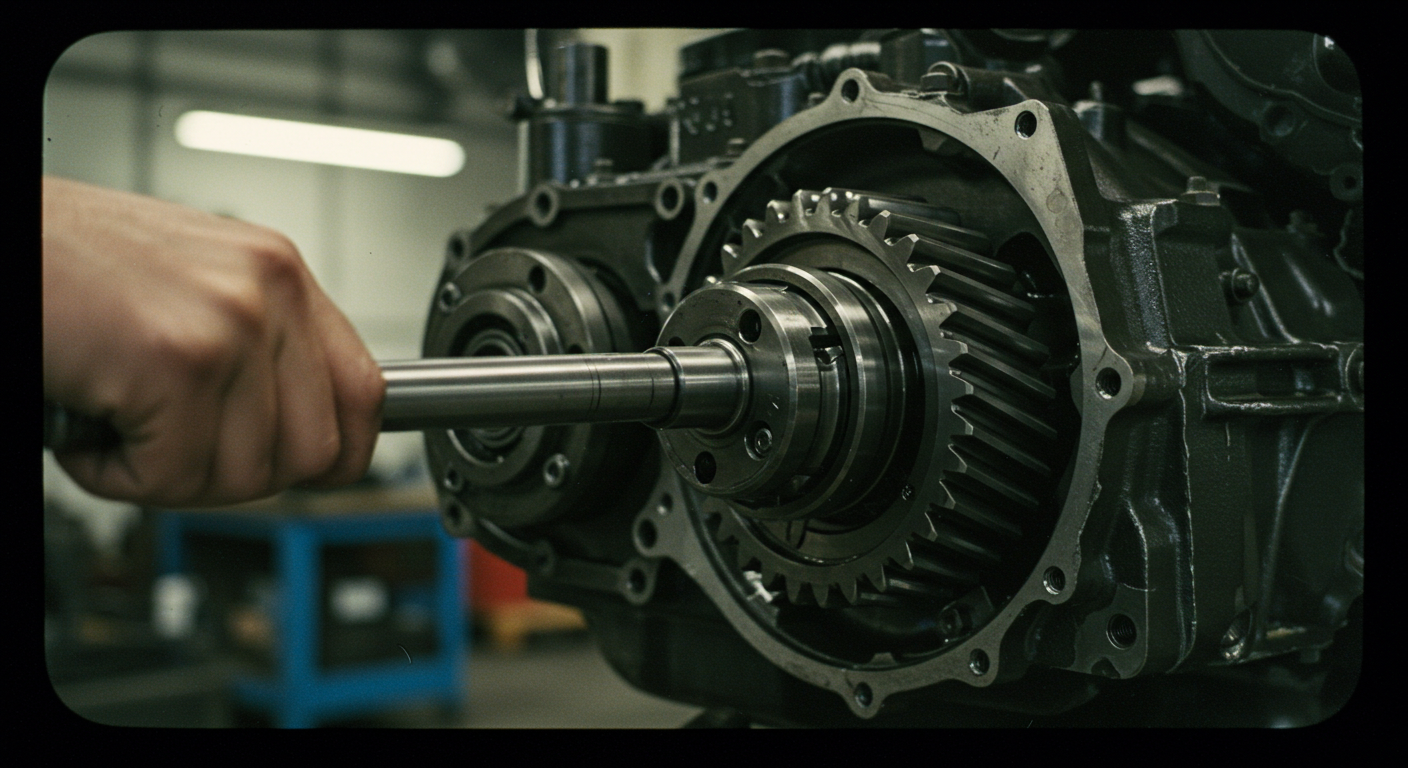
Industrial gearbox temperature limits typically range from 60°C to 100°C during normal operation. Continuous operation above 100°C can reduce lubricant life and damage components. Monitoring systems should trigger alarms at 95°C and shut down at 105°C to prevent failure.

Types of Thermal Points
Different parts of a gearbox heat up in different ways. Each area has its own safe temperature range.
Oil Sump Temperature
Oil sump temperature is measured at the bottom of the gearbox where lubricant collects. This measurement provides the average operating temperature of the lubricant system.
Industrial gearboxes typically operate with oil sump temperatures between 120°F and 180°F (49°C to 82°C). Temperatures above 200°F (93°C) accelerate oil degradation and reduce lubricant life by 50% for every 18°F (10°C) increase. When sump temperatures exceed normal limits, the underlying root causes — misalignment, overloading, lubricant contamination, or poor ventilation — are covered in overheating in industrial gearboxes: common causes and solutions.
Bearing Temperature
Bearing temperatures run 20°F to 40°F (11°C to 22°C) higher than oil sump temperatures due to direct friction and load.
Rolling element bearings in gearboxes operate safely up to 250°F (121°C). Plain bearings tolerate higher temperatures, reaching 280°F (138°C) before experiencing accelerated wear.
Gear Mesh Temperature
Gear mesh temperatures represent the hottest points in a gearbox, reaching 300°F to 400°F (149°C to 204°C) during normal operation. These flash temperatures occur at the contact point between gear teeth during power transmission.
The actual bulk temperature of gear teeth stays 100°F to 150°F (56°C to 83°C) lower than flash temperatures. High-speed gears and heavily loaded applications produce the highest mesh temperatures due to increased sliding friction.
Housing/Surface Temperature
Gearbox housing temperatures indicate overall heat dissipation efficiency. Surface temperatures normally measure 30°F to 50°F (17°C to 28°C) below internal oil temperatures.
Housing temperatures above 180°F (82°C) suggest inadequate cooling or excessive internal heat generation.
Lubricant-Specific Temperature Limits
Not all oils work the same way under heat. Some break down faster than others.
Mineral Oils
Mineral oils are the most common type used in gearboxes. They come from crude oil and cost less than synthetic options. But they can’t take as much heat. Most start to break down at 90°C. At 100°C, the oil life drops sharply—by half for every 10°C rise.
To ensure reasonable lubricant longevity and prevent rapid degradation, the bulk oil temperature for mineral oil-based gear oils should ideally not be continuously maintained above 75-80°C (167-176°F).
Synthetic Lubricants
Synthetic lubricants work better in high-heat or high-speed gearboxes. They keep their thickness and protective power up to 120°C or even 150°C, depending on the type. For example, synthetic PAOs (polyalphaolefins) can last twice as long as mineral oils at 100°C.
Lubricant Temperature Limits Table
| Lubricant Type | Typical Max Continuous Operating Temperature (°C/°F) (General Guideline) | Key Thermal Advantages | Key Thermal Limitations/Considerations |
|---|---|---|---|
| Mineral R&O | 75-80°C (167-176°F); Sump <93.3°C (200°F) | Cost-effective | Rapid oxidation above ~82°C (180°F); Shorter life at high temps; Lower VI compared to synthetics. |
| Mineral EP | 75-80°C (167-176°F); Sump <93.3°C (200°F) | Good load-carrying capacity; Cost-effective | Rapid oxidation above ~82°C (180°F); Additive chemistry can be temperature sensitive; Shorter life at high temps. |
| Compounded Mineral | ~82°C (180°F) | Excellent lubricity for sliding contacts; Adheres well to surfaces | Limited upper temperature capability; Fatty additives can degrade. |
| Synthetic PAO | Can exceed 120°C (250°F) | Excellent thermal & oxidative stability; High VI; Good low-temp fluidity; Can reduce friction | Higher cost than mineral; Compatibility with some seals/paints needs checking. |
| Synthetic PAG | Can exceed 120°C (250°F) | Excellent lubricity, especially for worm gears; High VI; Good thermal stability | Higher cost; Generally incompatible with mineral oils and PAOs; Specific seal compatibility concerns; Can be hygroscopic. |
| Synthetic Ester | Can exceed 150°C (300°F) | Very high thermal stability; Good lubricity; Good solvency (keeps components clean) | Highest cost; Potential hydrolytic instability if water is present; Seal compatibility needs careful consideration. |